So there have been a lot of things going on the past month. (Has that really been how long it has been since I last posted?)
Football is coming to an end and that should free up some time for me to focus on other things.
The applications for this years Toyota International Teacher Program were sent to me this month and I had a little envious feeling about the teachers who will be applying this year. What a trip...What a trip...
My two year old and I played in the snow. I think that it was the first time that we have done that. It will not be forgotten anytime soon.
AP Chemistry is keeping me very busy and I am having a difficult time finishing all of the work (labs, assignments, notes etc.) for this class.
My first year chemistry students are having a hard time doing the things that they need to do to finish the course. Some of them are starting to ask: "Why do we need to know this?" I would have thought that with all of the new activites that I am trying and the way that the class is structured (more student centered) I would like to think that this question had answered itself. I wonder if the stuedents are aware of the changes? Does this class look any different from the others? How can I use the computers to design student led activities for calculations and problems that the students have no idea about? The basic concepts in chemistry are easy to interpret using the computers but when we enter untis based on math concepts with chemical equations the students have a very hard time explaining them.
I see how the computers are easy to implement in classes when some of the background information has been covered but how can the consturctivist approach be applied to a chemistry classroom? When the information of the course is new how can the investigations be implemented?
The Astronomy class is an entirely different beast. That class is a great place to test new learning activities and see what the students come up with. Recently the students were given all of the unit inforamtion that I would have presented to them and they could complete it in any order. I was a little worried about how that would work but the students were ready to complete all of the work by the deadline that they set! The final project was a brochure that would sell a telescope. When the students asked if their brochure was "okay" I started responding with "Would you buy it?" - Thanks Mr. Fisch for that idea. How could I do this with other topics? I am currently working on the idea for the final project, more to come later.
Since it seems that doing the same old stuff in education is a lot easier than changing things to meet the student's needs I can see why teachers and administrators are resistant to this mode of thought. It asks all of us to think outside of whatever box we started in and that kind of reflection can cause problems. We are asking ourselves to critically think about what we do daily and with all of the other stuff that we have going on we tend to not react well. The thought that those who can...do...and those who can't...teach seems to be a perception in the business world that would not be correct for our building. I even find myself thinking that if I had some of the teachers in this building earlier in my schooling then I might have been an English major or a history major but my chemistry teaher was the one that helped me find what I liked to learn about. Isn't that what school is supposed to be? Helping the students find their interests?
Friday, October 27, 2006

Wednesday, September 20, 2006
Starbucks Thoughts.
As I sit at my desk, reflecting on the sadness that comes with the bottom of a cup of coffee, I read something that really made me think about my day.
"Flying by myself in a tiny aircraft over lonely woods: I have no one to blame
if I make a bad judgement, and the laws of physics won't listen to my excuses.
What would my life be like if I always had to take full responsibility?"
- Mark Olson (Taken from my Starbucks cup The Way I See It #128)
What would this do to our days if people thought of this kind of thing every time they had a decision to make?
Grades, What Grades...?
The other day, I had a discussion with a student in my AP Chemistry class who is struggling with the grading process in this school. He was thinking that he should learn material because it was interesting to him. However, this year, which is his junior year, he is learning that school becomes looking at things that you might not find to be too interesting. He is a little discouraged because he is used to looking at course material in the context of wanting to learn it and not "to get ready for a test." I thought that this was what we wanted our students to do. (To seek the information because they wanted to know it not because they had to know it.) When I asked him why he thought school should be learning of information that is interesting to the learner, his response was that someone told him that college was this way. Wow, in college you get to study things that interest you? I thought that there were prerequisite courses that you had to "get out of the way". Wouldn't it be nice if all schooling was set up so that you were learning things that were intersting to you and not because someone else thought it was important? Do you think that students might pay more attention or be involved in constructing their learning if they were allowed to find something in a subject that was interesting to them? I find it interesting that I was having this conversation with a student when we, as a group of teachers, are having the same conversation.
The conversation progressed to a point where the student said he felt grades were detrimental to learning. When asked for explaination of his thoughts I found out that he felt grades were something that students were working towards. While this might be a good temporary goal for students he thought that the material would become secondary to the grade. I told him that, as a group of teachers, we are looking at how to overcome that. I think he felt excited to be a part of a school where we are asking these difficult questions. While we don't have the answers at least we are asking these and other difficult questions. (This might be why there are teachers who are struggling with what we are doing.) He also wanted to know why we were trying to take a college level class (AP Chem) and apply high school standards to it? I did not even know what to say to this.
The thing about these conversations is that they made me think about two big items.
1) How could we use grades to give feedback and show progress and not just as an end in themselves? (I am going to try using more of an AP scale, 0 to 5, in an elective that I teach.)
2) Where was I in high school? I think that I was trying to get through high school and was not asking why I needed to learn something. Are there other students who are asking these important questions about school and learning and grades? or is this young man a special case? Should we be asking them for help in designing material instead of jsut telling them?
That is a lot of thought conversation between a student and a teacher. (I will let you try to figure out who is who in this post. I mean the teacher and the student.)
The conversation progressed to a point where the student said he felt grades were detrimental to learning. When asked for explaination of his thoughts I found out that he felt grades were something that students were working towards. While this might be a good temporary goal for students he thought that the material would become secondary to the grade. I told him that, as a group of teachers, we are looking at how to overcome that. I think he felt excited to be a part of a school where we are asking these difficult questions. While we don't have the answers at least we are asking these and other difficult questions. (This might be why there are teachers who are struggling with what we are doing.) He also wanted to know why we were trying to take a college level class (AP Chem) and apply high school standards to it? I did not even know what to say to this.
The thing about these conversations is that they made me think about two big items.
1) How could we use grades to give feedback and show progress and not just as an end in themselves? (I am going to try using more of an AP scale, 0 to 5, in an elective that I teach.)
2) Where was I in high school? I think that I was trying to get through high school and was not asking why I needed to learn something. Are there other students who are asking these important questions about school and learning and grades? or is this young man a special case? Should we be asking them for help in designing material instead of jsut telling them?
That is a lot of thought conversation between a student and a teacher. (I will let you try to figure out who is who in this post. I mean the teacher and the student.)
Saturday, September 16, 2006
Too Much, Too Fast
One of the issues with allowing the students to use new methodolgy and allowing them to construct their own understanding is the time that it takes. Now don't misunderstand me, I agree with most of the comments going on over on the fischbowl, but I am troubled by my first time through an AP class. There is a lot of information to get through in this class and the test score is the most important thing about this class (or is it?). If I do not get to the information, there are consequences to deal with. The students right now are doing a good job of not being too worried about their class grades because I think they are learning a lot. But how do we balance the large amount of information that I need to cover with the limited time (a lot of it taken by standardized testing that the school needs to do) and the use of allowing the students to find their own direction? I guess this will be a question that I (and we) will be looking for an answer to long after I leave teaching.
Update on the wiki
Thanks to the folks at pbwiki.com for their help on the use of a wiki in the classroom. Also, Karl Fisch is an amazing resource for those of us trying new things in the classroom. After trying multiple ways to use this tool in a classroom, I was amazed at how fast the students adapted towards their use. The wiki allows the students to put together information in new ways and allows them to express themselves through the material that we are studying.
Check out their work in progess at www.ahsastronomy.pbwiki.com
Check out their work in progess at www.ahsastronomy.pbwiki.com
Sunday, September 10, 2006
Wiki(ed) Headache
Wow.
After a good start to the school year and with students getting used to using the computers in class I have tried to spend the past few days getting an idea of how to use a wiki for my class.
I am not even sure where this is going but I would like for my classes to write an on-line book for themselves.
I guess the trouble right now is figuring out what to do with a blank slate. I am trying pbwiki and I am not sure if I need to invite all of the students so that they can add to it. I am not sure if I need to create a few pages or if we can get by with just one page for now. Does anyone have any ideas?
I think that this could be a very powerful tool but I feel lost.
After a good start to the school year and with students getting used to using the computers in class I have tried to spend the past few days getting an idea of how to use a wiki for my class.
I am not even sure where this is going but I would like for my classes to write an on-line book for themselves.
I guess the trouble right now is figuring out what to do with a blank slate. I am trying pbwiki and I am not sure if I need to invite all of the students so that they can add to it. I am not sure if I need to create a few pages or if we can get by with just one page for now. Does anyone have any ideas?
I think that this could be a very powerful tool but I feel lost.
Monday, August 28, 2006
I think...
As I think about the first few weeks with having the students work with the computers, in a way that they are forming their learning, I have realized that the students are not always on task. I have also realized that my job description has changed. No longer am I the "keeper of knowledge" but I am here to help the students form their own knowledge. Watching this happen, I realized that there are times when the students need my direct instruction, chemistry is not easy. I also know that there will be mistakes on the way.
"Only when sleeping do we make no mistakes. Mistakes are the privilege of the active person, who can start over and put things right."
-Ingvar Kamprad
I am thinking about the classroom that I am a part of (no longer "my classroom") and I am energized by the work that the students are doing. They actually are engaged and can do the things that I set them to do, with-out me "holding their hands". If we just let them work they will.-
"Only when sleeping do we make no mistakes. Mistakes are the privilege of the active person, who can start over and put things right."
-Ingvar Kamprad
I am thinking about the classroom that I am a part of (no longer "my classroom") and I am energized by the work that the students are doing. They actually are engaged and can do the things that I set them to do, with-out me "holding their hands". If we just let them work they will.-
Friday, August 18, 2006
The first day of the rest of their lives.
Yesterday we started using the computers in Astronomy. Aside from some small issues, things whent very well. I would say that looking at this group allows me to be very excited about trying this style of teaching with them. There is a high level of energy in the class about the instructional changes and use of new methodologies. I am going to teach the first unit the same for the most part since it is a lot of activities. I am looking forward to the second unit, one that I have not enjoyed in the past, since I am going to ask them how the unit should look.
I told them that life changes now, here, in this room. It is a journey and I am excited to be on it.
I told them that life changes now, here, in this room. It is a journey and I am excited to be on it.
Saturday, August 12, 2006
Addition

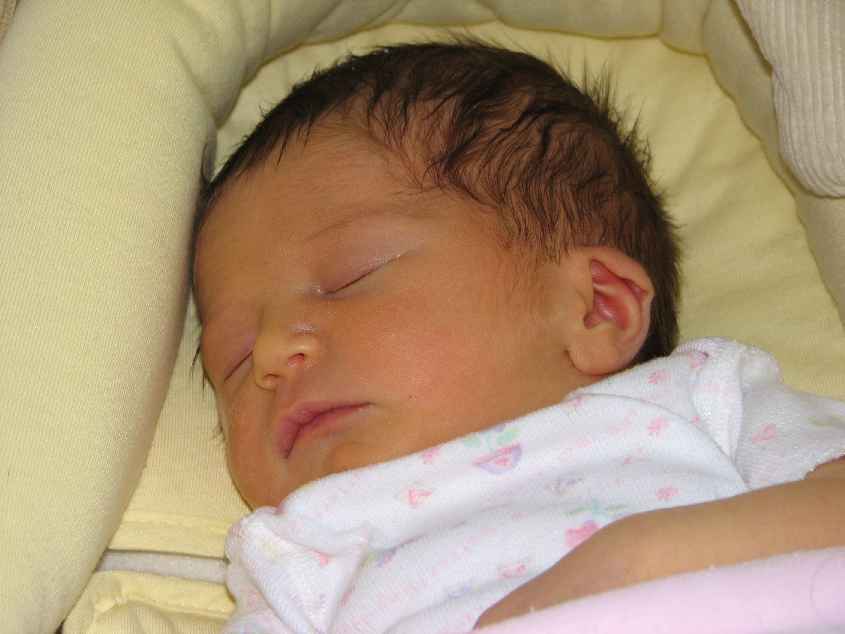
So, some people have been wondering where I have been.
Let me tell you...
Allison Brianne was added to our family on the 25th of July. She weighed 6 lbs. 10 ozs and was 19 inches long. Everyone is doing great. Megan is a good big sister, mom is good and dad..well, dad is.
Thursday, August 10, 2006
To discuss.
I had a difficult time talking about the philosophy of education. I think that the main difficulty came from the fact that the material we are looking at forces us to change our philosophy all the time. I wonder if we will ever reach a point where we have a true peace about our philosophy or if this will be an on-going thing. I do think that if we have reached a conclusion about how the philosophy should look then we need to reexamine our practices in the classroom.
The other disussions that we had in the group were very good. The grading talk, while overdone (haha), was very helpful to hear about where other people were on their feelings of grading.
I cannot wait to see what others are doing in their classroom's this fall.
The other disussions that we had in the group were very good. The grading talk, while overdone (haha), was very helpful to hear about where other people were on their feelings of grading.
I cannot wait to see what others are doing in their classroom's this fall.
Monday, July 24, 2006
Where next?
Since I retuned from Japan I have had a few thoughts about the trip (see earlier post "A Summary"). Most importantly lately is the thought of "Genchi Genbutsu" which means essentially to go and see. There is a lot in the world and it is not as scary as I would think. I guess the strongest thing that I left thinking is, where next? If the world is calling me to see it, how and where do I go? I want to go out and see. I want Kaizen my world. I want to take my students to different levels and places. I want my family to see what the world is made of. The people, the places and the sounds of Japan are the things that will cause the most reflection in my world.
Sunday, July 23, 2006
One Wise Man
At the beginning of Chapter 10 in The World Is Flat, Thomas Friedman includes a quote from Albert Einstein:
I was thinking about this and my classroom for the next year. As I embark on a new chapter of my career I think that there will be a lot of discord and difficulty. How I look at these items will determine how my attitude changes each day. As a team we are going to go ahead and try to find out one to one notebook instruction in a public school. There is little that I have seen on how to do this effectively in a Chemistry classroom. I know that there are ways to do this but I am afraid that I will fall back on the ways that have worked in the past. Time is the biggest struggle when trying to implement this type of change in a classroom.
What will my classroom look like? How will the students respond? How will I adapt and respond? What will the next few years look like? Is this the next level for instruction in my classes?
I do think that stretching teachers, outside of their comfort zones, is what will pushthe students to new levels. For this outlook, I am excited to be a part of this reform in schooling and proud to be a part of it.
Out of clutter, find simplicity.
From discord, find harmony.
In the middle of difficulty, lies opportunity.
I was thinking about this and my classroom for the next year. As I embark on a new chapter of my career I think that there will be a lot of discord and difficulty. How I look at these items will determine how my attitude changes each day. As a team we are going to go ahead and try to find out one to one notebook instruction in a public school. There is little that I have seen on how to do this effectively in a Chemistry classroom. I know that there are ways to do this but I am afraid that I will fall back on the ways that have worked in the past. Time is the biggest struggle when trying to implement this type of change in a classroom.
What will my classroom look like? How will the students respond? How will I adapt and respond? What will the next few years look like? Is this the next level for instruction in my classes?
I do think that stretching teachers, outside of their comfort zones, is what will pushthe students to new levels. For this outlook, I am excited to be a part of this reform in schooling and proud to be a part of it.
Thursday, July 20, 2006
Baseball and Umbrellas?


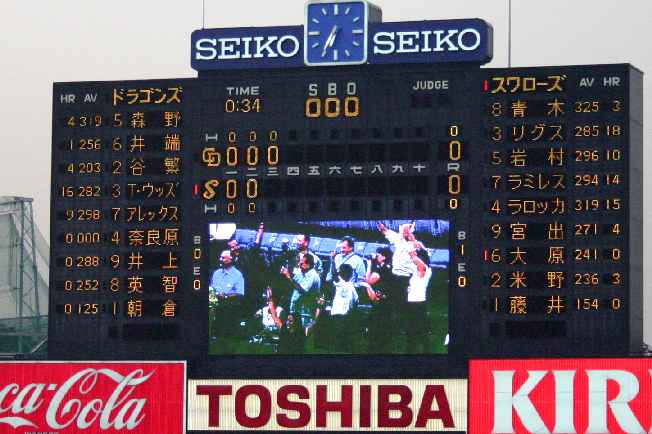


While in Tokyo I and some of my new friends enjoyed a baseball game. It sure was fun and the view was amazing. We watched a game between the Yakult Swallows and the Chunichi Dragons. I had noodles for dinner and made a friend that collected WWII airplanes (two were given to me as gifts!). Note: Two photos (The one of me giving the gift and the shot of the Jumbo-Tron with us on it) are from another Toyota International Teacher Deb Cole. You can find her blog here.
Toyota, Greenspan and a Teacher
So, let me tell you about an exchange that I had in Torrance, California. I was having dinner at the Toyota Motor Sales, USA offices and struck up a conversation with James E. Lentz (Group Vice President & General Manger, Toyota Division) while on the Toyota International Teacher Program. Why was this interesting? Well, Mr. Lentz was saying that at lunch the day before, Alan Greenspan...
Wait did he say Alan Greenspan?
I have never been involved in a conversation like this before!
Back to the story.
Anyway, Mr. Lentz asked Mr. Greenspan "What keeps you awake at night now that you are retired?" The response is what I found interesting.
Mr. Grenspan's response was that he worries about the kids in school who are not being built into thinkers. They are do'ers who can fill rolls where there is little creative/independant thought taking place. Students need to be working in the math, science and engineering fields. The US needs people to fill rolls that are going to open soon.
After hearing about this conversation I am again left wondering if we are doing the best that we can to get studnets interested in the fields like math and science or are we turning them off? I cannot wait to try some of the new things that are coming to our school this year. I hope that this is a question that we as a group of teachers continue to ask. These are not the kind of conversations that teachers find themselves in all the time and I think that there was a lot of value in being a part of it. What will the flat world have in-store for my kids?
Wait did he say Alan Greenspan?
I have never been involved in a conversation like this before!
Back to the story.
Anyway, Mr. Lentz asked Mr. Greenspan "What keeps you awake at night now that you are retired?" The response is what I found interesting.
Mr. Grenspan's response was that he worries about the kids in school who are not being built into thinkers. They are do'ers who can fill rolls where there is little creative/independant thought taking place. Students need to be working in the math, science and engineering fields. The US needs people to fill rolls that are going to open soon.
After hearing about this conversation I am again left wondering if we are doing the best that we can to get studnets interested in the fields like math and science or are we turning them off? I cannot wait to try some of the new things that are coming to our school this year. I hope that this is a question that we as a group of teachers continue to ask. These are not the kind of conversations that teachers find themselves in all the time and I think that there was a lot of value in being a part of it. What will the flat world have in-store for my kids?
Wednesday, July 19, 2006
Torrance and Toyota

For the actual press release about the Toyota International Teacher Program click here.
Let me tell you a little about june 23rd and 24th.
I was taken awayby United airlines to LAX from DIA for the start of an adventure that I was greatly looking forward to. There were four other teachers from the state of Colorado on our flight (Kelly from Greeley, Saralynn from Joes, TJ from Denver and me). How did we find each other if we had no met before the trip you might ask......
Well, the Toyota group that was "taking care" of us had provided a handy rolling carry-on that had the groups logo on the outside. We talked briefly about ourselves and then boarded the flight to LAX. While on the flight, I shared for the first of many times the excitement that I had about the trip. The man sitting next to me was the lucky soul that was able to hear the explanation about the trip and all. We had a great talk and what a small world it was already since we had some common friends.
Once at LAX with my bags in tow, alongside my new friends, I started to see that this was no ordinary trip for a teacher. There was a young man holding a sign for "Toyota International Teachers." He took all of our bags and led us outside to a waiting Limo! Then the short trip to the hotel in Redondo Beach, California. I had never been to this area of LA and was excited to walk around. However, I felt a little odd being dressed in what the group would come to call "Business Casual Attire"since I was on the beach.
We had a short getting to know you session and then it was on to the first of our many bus rides over the next two weeks. We went to Toyota USA offices in Torrance, California. These are some amazing buildings. There is even a "green" building that is environmentally friendly. We were treated like stars. There was food, drink and entertainment. We talked with some very important people at Toyota USA and became even more excited about the trip.
My roommate was a newly married teacher (Jeremy from Indiana) and he was just as excited as I was about going to see Japan.
We had breakfast in the hotel and listened to a few speakers. One of the speakers was from Toyota University (Michiko Powell) and she presented some of the basic do's and don'ts for travel to Japan.
What a couple of days! I have never as a teacher been treated this nicely. What would the world be like if teachers were treated like this all of the time in every country?
Camera Help
Hey, I just purchased a Canon S3IS digital camera. Is there anyone who might see this post that can help me. I would like to post some pictures to this blog but I am not sure how to decrease the size once the photo is on the computer. I do not want to use too high of a resolution when posting since I am on a dial-up commection. I have Microsoft Picture-It on my home computer but I am not sure what to do.
Any help would be good.
Any help would be good.
Japan Itinerary - A Summary
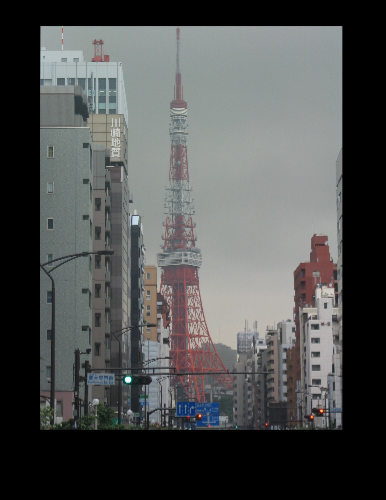
So, before I start talking about how the "Toyota International Teacher Program" to Japan changed the way that I think about the world, let me tell you a little about what we did.
The trip started on the 23rd of June for me as I left DIA (Denver International Airport) and headed west to LAX (Los Angeles International Airplort). There were three other teachers from Colorado and we were all on the same flight to LAX. We had never met before and had no idea of what were going to experience in Japan.
There was an evening orientation at Toyota Headquarters in Torrance California.
June 24th - Orientation/Cross-cultural speaker and departure for Narita Airport in Tokyo.
June 25th - Arrival in Tokyo and a free evening.
June 26th - Toyko Orientation, presentation by an environmental speaker for Toyota, a Kabuki performance and a free evening.
June 27th - Visited Soka University and met with students and a professor, visited a high school and talked with teachers and students, a baseball game in Tokyo and a free evening.
June 28th - Presentation at Roppongi Hills on architecture, environment and industry. We visited Meiji Shrine and the US Embassy. That evening we traveled to Nagoya by the shinkansen (bullet train).
June 29th - Visited Toyota Commemorative Museum, TMC Showroom and viewed the production line for the Camry and Prius. We also had an introduction to the Toyota Production System (TPS). That evening we traveled to Kyoto by the bullet train.
June 30th - Met Mr. Alex Kerr who gave an overview of all the stuff in Kyoto and an introduction to his program called Origin Arts Program. We were allowed to explore Kyoto for the last half of the day on our own.
July 1st - We were at the Origin Program today where we learned about Calligraphy, Waraku, Tea Ceremony and Noh Drama.
July 2nd - We departed for Nagasaki and then to the island of Hirado. We traveled to the hotel on Hirado, enjoyed an onsen and looked around the town. Another group of teachers went to another island for a stay there.
July 3rd - We took a tour of the town and castle, visited Hirado Elementary School and visited with the students, and that night we had an overnight stay with a family on the island.
July 4th - We traveled back to Nagasaki and had a program debriefing at the Art Museum. We were given time at the Peace Museum and Memorial Park. That night we had a farewell party.
July 5th - We traveled from Fukuoka Airport to Kansai to LAX to DIA.
July 7th - Jet-lag and head fog catch up with me.
July 8th - Finally have some clear thoughts and can write stuff on paper.
Well, there it is. The whirlwind tour of the country of Japan. Someone asked if I would go back. My answer was a strong "YES". I will put some detailed entries from the trip up over the next couple of days.
Summer
I just cannot wait to see what the rest of the summer months have to offer.
Let see, since football camp at the end of the school year, I have:
1) Worked on the house
2)Rode my bike around Metro Denver
3) Traveled to Japan (more on this later)
4) Planned for our second daughter
5) Traveled to the mountains
6) Played with my daugter Megan
7) Read some books
8) Worked on some AP Chemistry problems (which is a new prep for me in the fall)
9) Stressed about making my classroom more student centered
10) Played around with my iPod
11) Worked in my yards
12) Attended some very important birthday parties (Megan turned two)
13) Sold part of my childhood toys on eBay
14) Read some blogs/made some comments
15) Met with some teachers at school to determine laptop computer use policies
16) Rewrote my classroom policies
17)Watched "The Tour"
18) I am sure that I am missing some stuff but this is what my brain would allow right now.
I am not sure but this sounds like a lot and I know that other teachers are doing the same kind of things. There are people out there who think that summer is just a nice time off for teachers. I am sure that there are those teachers out there who do little thinking on their practice in the classroom. I am not having one of those summers. This is not a post that says how good I am or how much I am doing to be better but one to just remind myself that there is constant work that needs to be done. The work is not only in the classroom setting but for me also.
Japan was amazing and the next few posts that I make will be about that.
Has anyone been watching the Tour de France? Did you see the Alpe d' Huez stage? This has been an amazing Tour and the more I watch the more I think about education. If you do not know, a lot of the riders favored in the Tour were removed before the start. What this did was it left the other riders with a very "open" ride where there was no one favored rider but everyone had an equal chance. I thought about this a lot and what if our schools were places where all of the students had an equal chance. One where the playing field was level. What would that look like?
Let see, since football camp at the end of the school year, I have:
1) Worked on the house
2)Rode my bike around Metro Denver
3) Traveled to Japan (more on this later)
4) Planned for our second daughter
5) Traveled to the mountains
6) Played with my daugter Megan
7) Read some books
8) Worked on some AP Chemistry problems (which is a new prep for me in the fall)
9) Stressed about making my classroom more student centered
10) Played around with my iPod
11) Worked in my yards
12) Attended some very important birthday parties (Megan turned two)
13) Sold part of my childhood toys on eBay
14) Read some blogs/made some comments
15) Met with some teachers at school to determine laptop computer use policies
16) Rewrote my classroom policies
17)Watched "The Tour"
18) I am sure that I am missing some stuff but this is what my brain would allow right now.
I am not sure but this sounds like a lot and I know that other teachers are doing the same kind of things. There are people out there who think that summer is just a nice time off for teachers. I am sure that there are those teachers out there who do little thinking on their practice in the classroom. I am not having one of those summers. This is not a post that says how good I am or how much I am doing to be better but one to just remind myself that there is constant work that needs to be done. The work is not only in the classroom setting but for me also.
Japan was amazing and the next few posts that I make will be about that.
Has anyone been watching the Tour de France? Did you see the Alpe d' Huez stage? This has been an amazing Tour and the more I watch the more I think about education. If you do not know, a lot of the riders favored in the Tour were removed before the start. What this did was it left the other riders with a very "open" ride where there was no one favored rider but everyone had an equal chance. I thought about this a lot and what if our schools were places where all of the students had an equal chance. One where the playing field was level. What would that look like?
Tuesday, June 20, 2006
A thought.
In one of the books that I am reading to prepare for the trip to Japan there was something written that struck me and got me thinking. In the book Following The Brush, John Elder states:
I sometimes think that we do not take enough time to watch what is happening and reflect on it. We, and I am talking to myself here, try to over analyze things most of the time. I wonder if there are really as many things to fix about the education system or if we are looking to blame one part of a complex thing for the problems that we have. Are we looking at things for the future generations or are we fixing them for ourselves? When new reform is started, is it focused on the right things or are the people working on it out for themselves?
Just a thought...
"...we can also remember larger forces at work in the world."
Elder, John. Following The Brush, Boston: Beacon Press, 1993.
...and to hear the depth of Bahso's declaration in Oku no Hosomichi that " life itself is a journey." So easily we give our hearts to suffering old wars and imagining new ones, and our minds to poring over bank statements. But walking out under the flower-bright sky, we can also remember larger forces at work in the world.
I sometimes think that we do not take enough time to watch what is happening and reflect on it. We, and I am talking to myself here, try to over analyze things most of the time. I wonder if there are really as many things to fix about the education system or if we are looking to blame one part of a complex thing for the problems that we have. Are we looking at things for the future generations or are we fixing them for ourselves? When new reform is started, is it focused on the right things or are the people working on it out for themselves?
Just a thought...
"...we can also remember larger forces at work in the world."
Elder, John. Following The Brush, Boston: Beacon Press, 1993.
Missing Items
As I sit in my house, during what most people think are the best three parts of teaching (June, July and August), I feel as though I have been missing something. I was wondering what it could be...Contact with students?...Contact with other teachers?...Then it hit me.
Blogging, I have not been doing much of anything lately.
I am reminded why it is so important to write things down in this profession. I try to remember what it was that made a day so special and I cannot. I try to think about what worked during a lesson (one that I thought was going to go so well) and what did not work and cannot remember. I try to recall what I was thinking and doing and that is missing also. I have never been good at keeping a journal and now that I have one, I forget about it? What is happening to me?
As think about my classroom for the fall, specifically about blogs, I hope that I can be a little more consistent about them. My falling behind is one thing but if I am asking students to participate and I am not serving as a good example what am I doing? I am excited about the new technology that is coming to my classroom and AHS but will I be able to use it to the fullest potential?
I am going on a study trip to Japan for a couple of weeks and I cannot wait to see this part of the world. I will be allowed to visit schools and talk to students, administrators and teachers. I will be staying with a family for a few nights and experience teh fullest of Japanese culture. As I prepare for a trip to Japan I am reminded to write things down. I will be visiting schools, cultural places, and houses. Is there anything that I could tell pepole about the trip to Japan? (I am not an expert but will try to discuss things when I return.) Feel free to ask.
I will not be taking my notebook computer with me and I feel some form of withdrawl already. It is back to pen and paper for me. I hope that I can keep up on this trip. Pictures will be coming.
Blogging, I have not been doing much of anything lately.
I am reminded why it is so important to write things down in this profession. I try to remember what it was that made a day so special and I cannot. I try to think about what worked during a lesson (one that I thought was going to go so well) and what did not work and cannot remember. I try to recall what I was thinking and doing and that is missing also. I have never been good at keeping a journal and now that I have one, I forget about it? What is happening to me?
As think about my classroom for the fall, specifically about blogs, I hope that I can be a little more consistent about them. My falling behind is one thing but if I am asking students to participate and I am not serving as a good example what am I doing? I am excited about the new technology that is coming to my classroom and AHS but will I be able to use it to the fullest potential?
I am going on a study trip to Japan for a couple of weeks and I cannot wait to see this part of the world. I will be allowed to visit schools and talk to students, administrators and teachers. I will be staying with a family for a few nights and experience teh fullest of Japanese culture. As I prepare for a trip to Japan I am reminded to write things down. I will be visiting schools, cultural places, and houses. Is there anything that I could tell pepole about the trip to Japan? (I am not an expert but will try to discuss things when I return.) Feel free to ask.
I will not be taking my notebook computer with me and I feel some form of withdrawl already. It is back to pen and paper for me. I hope that I can keep up on this trip. Pictures will be coming.
Subscribe to:
Posts (Atom)
